Signs a tree may fail
UF/IFAS Extension's publication "Is my tree safe?" (ENH1246, reviewed August 2018) groups the warning signs a homeowner can see from the ground (checked Nov 9, 2026):
- Dead branches. Loose or missing bark, and no leaves or buds. The publication says large dead branches high in the tree are of greatest concern.
- Broken or hanging limbs. These have already failed and can drop on a calm day.
- Stems of equal size from one point. Two or more trunks splitting from the same spot, especially in a tight V, are weaker. Bark trapped inside the fork, called included bark, weakens the joint further.
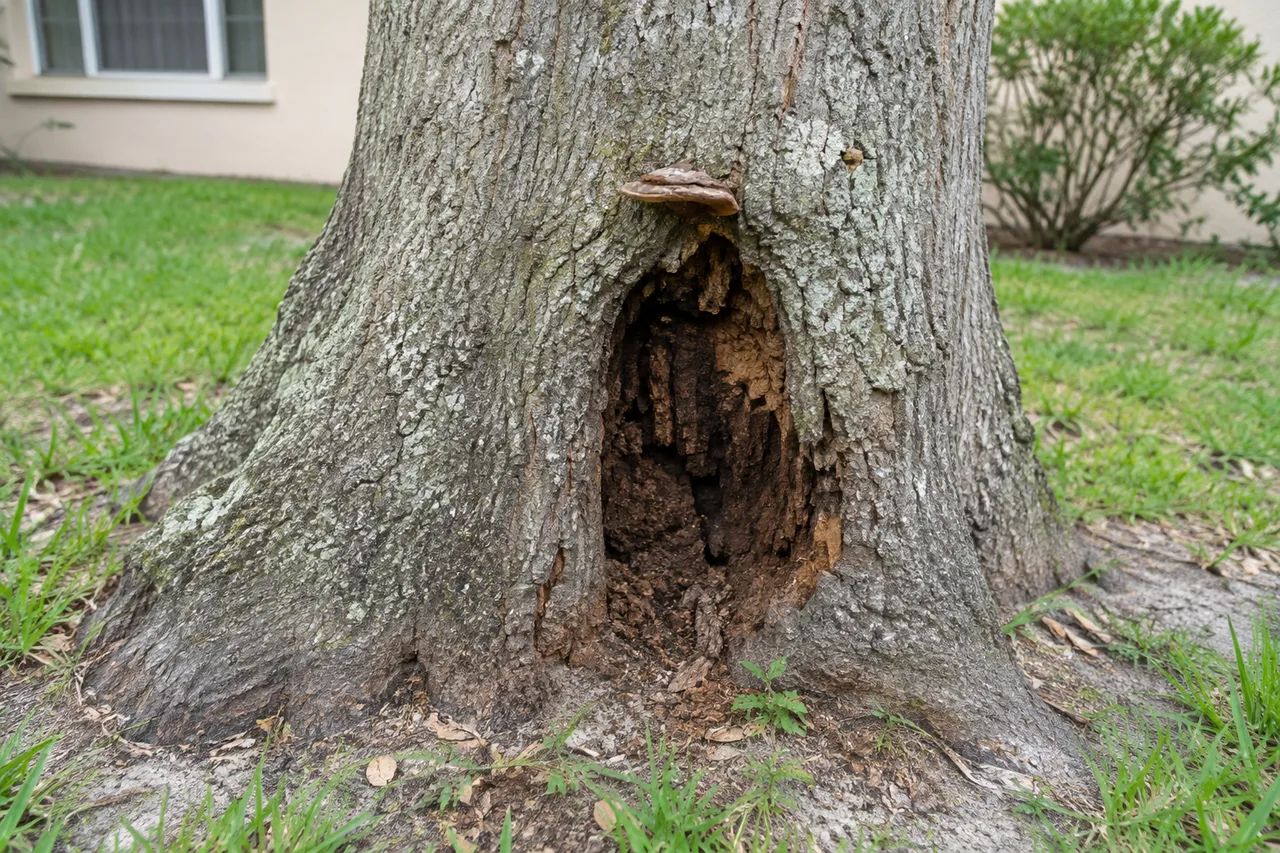
- Decay. Fungal conks and other fruiting bodies, open cavities, carpenter ants and animal nesting holes.
- Root problems. A thinning crown or dieback at the top, swelling or cavities where the trunk meets the ground, mushrooms or conks at the base, and broken root stubs.
The same publication says broken and hanging branches will drop sooner or later and can come down in calm weather, so they don't need a storm to be dangerous (checked Nov 9, 2026).
When a lean is dangerous
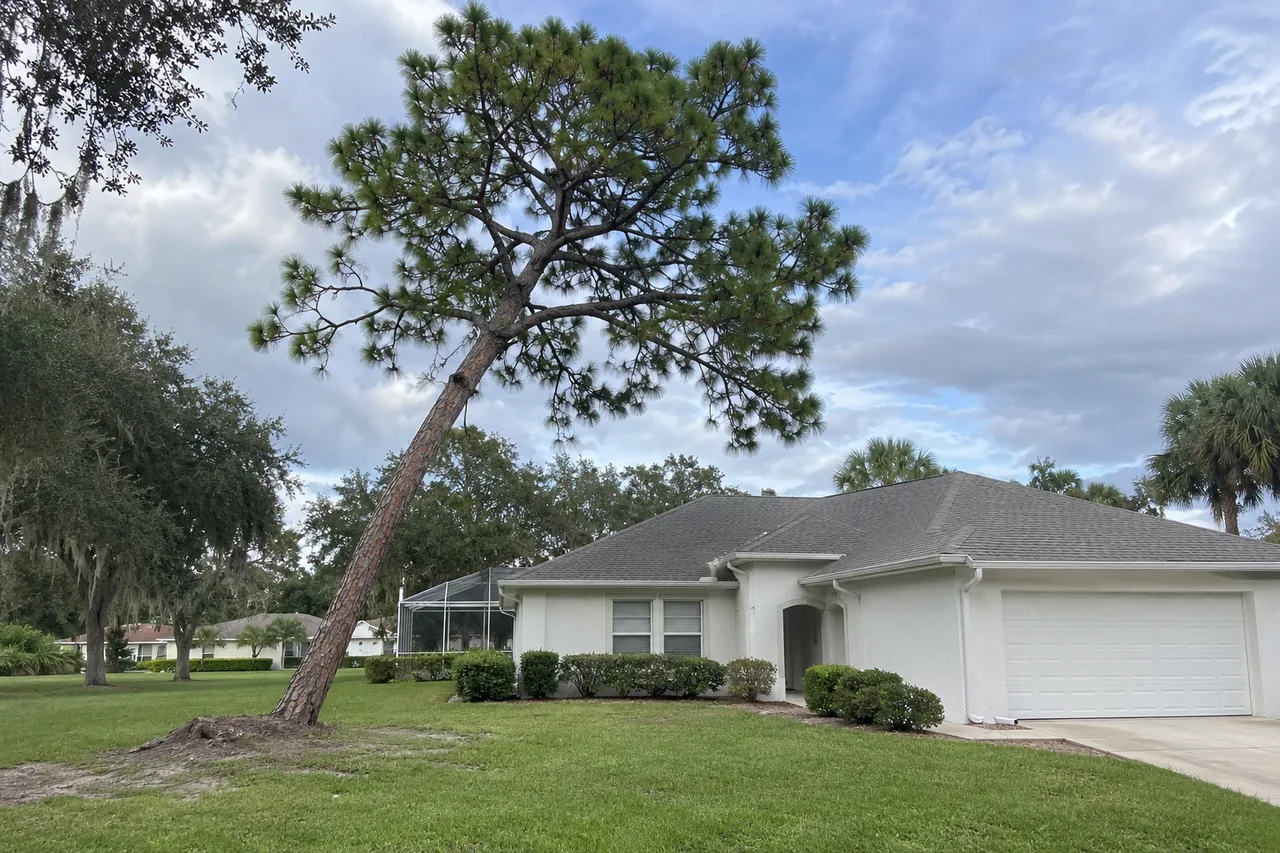
A lean on its own isn't the whole story. What matters is how it got there. ENH1246 separates the two cases:
- An old lean. A tree that has leaned for a long time often shows an enlarged lower trunk and branches that sweep back upward toward the light.
- A new lean. A lean that appears quickly, such as after a storm, signals that part of the root system has failed. The publication says it requires immediate attention.
It calls a lean that keeps increasing, or soil heaving up at the base, a high risk that needs an immediate inspection (checked Nov 9, 2026). A lean toward the house or the driveway deserves the quickest look.
Old laurel oaks and hidden decay
UF/IFAS gives a clear reason to keep an eye on older laurel oaks. Its laurel oak fact sheet (ENH-707, revised December 2018) gives the tree a life span of 50 to 70 years and says its trunks and large branches "often hollow from decay and wood rot." A small trunk wound or a poor pruning cut can start a column of decay running 10, 20 or more feet up the inside of the trunk. The same sheet says live oak is more resistant to decay and lives longer (checked Nov 9, 2026).
In UF/IFAS's hurricane surveys (FOR119, revised August 2026), laurel oak landed in the lowest wind-resistance group, with 77 percent of surveyed trees still standing after Hurricane Ivan, against 91 percent for live oak (checked Nov 9, 2026). A laurel oak planted when a subdivision went in decades ago may now be at the age the fact sheet describes. The oak guide goes further into what to look for.
Pines that fade after a storm
Slash and longleaf pines don't always fall in a hurricane. Some bend, crack or lose roots and then die over the following months. The Florida Forest Service's leaflet on pests after hurricanes (Leaflet 23, June 2019) says Ips engraver beetles and black turpentine beetles attack stressed, declining and recently dead pines and are likely to be more common in the months and years after a hurricane. Its signs: small clumps of resin on the bark, reddish-brown boring dust in bark crevices or at the base, and needles that wilt quickly. It notes that southern pine beetle isn't expected to increase after hurricanes (checked Nov 9, 2026).
The Forest Service's 2025 Forest Health Highlights report says engraver beetles contributed to pine deaths in North Florida after Hurricanes Debby, Helene and Milton in 2024 and during drought (checked Nov 9, 2026). A pine near the house that changes color in the months after a storm deserves a close look.
Cankers and root rot in oaks and other hardwoods
The same leaflet says hypoxylon canker, a fungus that shows up as gray, brown or black patches on the bark, becomes more common after major stresses like hurricane wind and flooding. When it covers the main trunk, the tree is generally dead or dying. Root diseases can take hold in damaged roots and may show nothing above ground until up to half of the root system is dead, and several conks on one tree point to extensive decay (checked Nov 9, 2026).
Palms: lethal bronzing
Cabbage palms are some of the toughest trees in a Florida storm, but they have one disease to know about. UF/IFAS Gardening Solutions describes lethal bronzing as fatal and untreatable. Hosts include cabbage and queen palms. The oldest fronds turn bronze and then brown, moving upward, and the palm is dead once the spear leaf in the center browns. UF/IFAS says symptoms usually show four to five months after infection and death follows in about two to three months. It was first found in Hillsborough County in 2006 and has spread to more than 30 of Florida's 67 counties. UF/IFAS says a palm confirmed by testing should be removed promptly (checked Nov 9, 2026).
Rules for taking out a hazard tree
- City of Leesburg. The tree protection section exempts a tree "in a hazardous or dangerous condition so as to endanger the public health, safety or welfare." The owner photographs it before removal; if it had to come down right away, a letter and photos go to the city within 15 days. The code adds that trees that died of natural causes or disease don't need replacing. Planning and Zoning: 352-728-9760 (city code, checked Nov 9, 2026).
- State law. Florida Statute 163.045 bars a city or county from requiring a permit, fee or replanting to remove a tree on a home lot when the owner has documentation from an arborist or a landscape architect, as the statute describes, that the tree poses an unacceptable risk (checked Nov 9, 2026).
- Unincorporated Lake County. The county's exemption form lists dangerous trees on residential property under the state statute, and says trees killed or toppled by lightning, hurricanes or tornadoes don't need replacing unless a development order requires them (checked Nov 9, 2026).
- Lady Lake and Fruitland Park. Lady Lake says a signed arborist report showing the danger replaces the permit and should be emailed to its building department. Fruitland Park's checklist says the same kind of letter can go to permits@fruitlandpark.org (checked Nov 9, 2026).
When the hazard is next door
A dead tree on the neighbor's side that leans over your roof is worth a friendly conversation and a photo for your records. The Insurance Information Institute's July 2010 release says that when a neighbor's tree damages your house, your insurer may seek repayment from the neighbor's insurer, and that this sometimes happens when the tree was in poor health or not properly maintained (checked Nov 9, 2026). Questions about who owes what belong with your insurer or a lawyer.
Mistakes with dead and leaning trees
- Waiting for it to come down on its own. Then the removal turns into storm cleanup, with the house in the way.
- Assuming a dead tree can be climbed. Decayed wood may not hold a climber; ask how the crew plans to reach it.
- Skipping the photos. Leesburg's hazard exemption depends on them.
- Treating a new lean as old. If the lean showed up after the last storm, treat it as urgent.
- Ignoring the fungus. Conks and mushrooms at the base point to decay you can't see.
Questions about failing trees
Is a hollow tree always dangerous?
Not always, but a cavity is one of the decay signs UF/IFAS lists, and how much sound wood is left decides it. Have someone look before the next storm season.
My oak dropped a big limb on a calm day. What does that mean?
ENH1246 notes that broken and hanging branches can fall even in calm weather. A large limb failing on its own can point to decay inside; have the rest of the tree checked.
Can I cut down a dead tree without a permit in Leesburg?
The city's code exempts hazardous trees with photo documentation and says dead or diseased trees don't need replacing. Photograph it and call Planning and Zoning first.
Should I remove a palm with brown fronds?
Bronzing that starts at the oldest fronds and climbs toward the center, ending in a brown spear leaf, fits the lethal bronzing pattern UF/IFAS describes. Testing confirms it.
This site sends each request to one independent contractor working around Leesburg. The site doesn't inspect or remove trees.
- UF/IFAS Extension publication ENH1246, "Is my tree safe?" (reviewed August 2018). Checked Nov 9, 2026.
- UF/IFAS Extension, Quercus laurifolia: Laurel Oak (ENH-707, revised December 2018); Selecting Coastal Plain Species for Wind Resistance (FOR119, revised August 2026). Checked Nov 9, 2026.
- Florida Forest Service, Leaflet 23, Tree Pests and Diseases Following a Hurricane (June 2019); Forest Health Highlights 2025. Checked Nov 9, 2026.
- UF/IFAS Gardening Solutions, Lethal Bronzing Disease in Florida. Checked Nov 9, 2026.
- City of Leesburg Code of Ordinances Sec. 25-337.1. Florida Statutes section 163.045, 2026 edition. Lake County Tree Removal Permit Exemption form (revised 2019/12). Town of Lady Lake, Tree Removal Permits. City of Fruitland Park tree removal checklist. Checked Nov 9, 2026.
- Insurance Information Institute release on fallen trees, July 22, 2010. Checked Nov 9, 2026.