
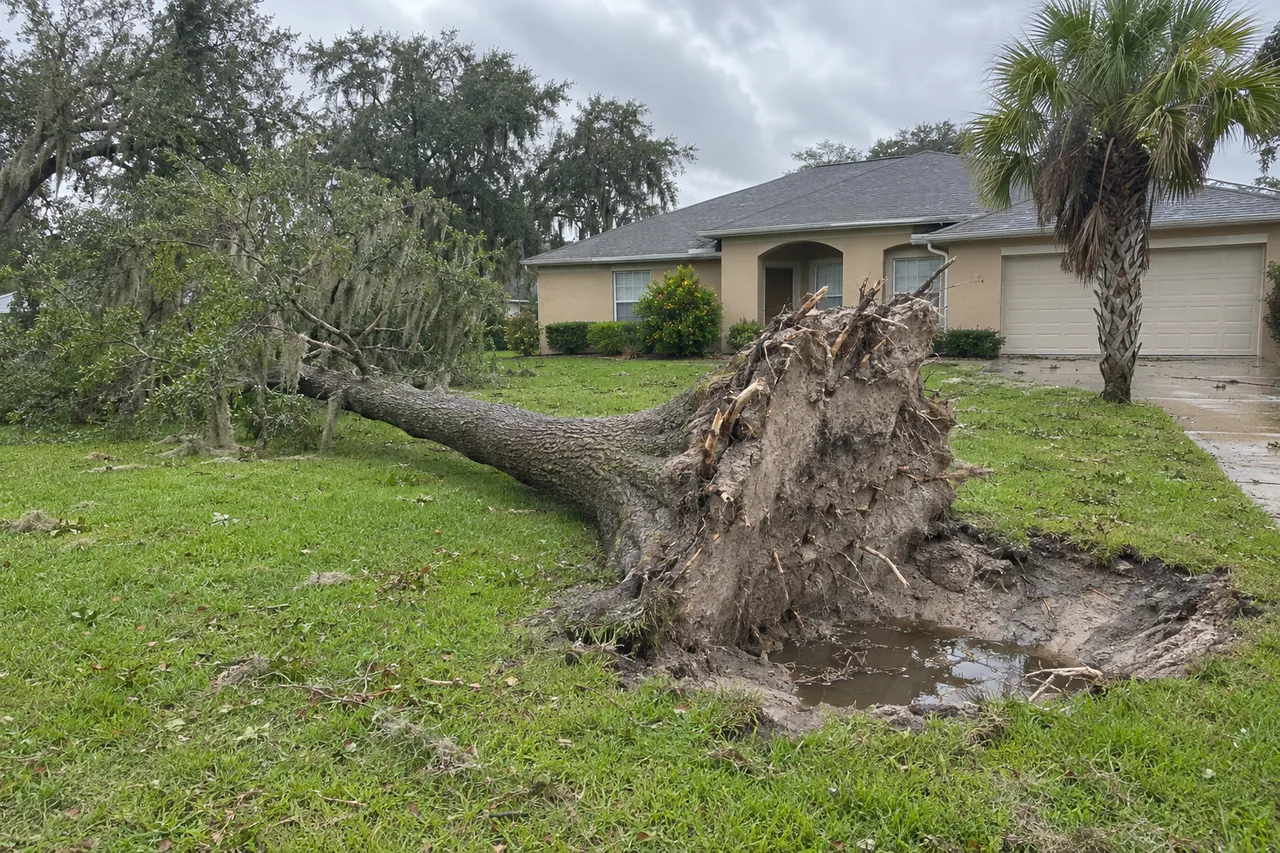
Why a downed tree is an emergency
A 2009 study in the journal Natural Hazards counted 407 deaths in the United States from trees that failed in wind between 1995 and 2007. The pattern that matters in Florida: when the storm was a hurricane, tropical storm or tornado, 40 percent of the people killed were at home when the tree struck, against 13 percent in thunderstorms and ordinary high wind (Schmidlin, checked Nov 9, 2026).
Lake County knows that risk. The tornadoes of February 2, 2007, killed 21 people in the county, and the Melbourne weather office's survey found large trees on the path stripped of their bark down to the stubs of their biggest limbs. After Hurricane Milton in October 2024, the office's county write-up reported numerous downed trees and power lines across Lake County and two storm-related deaths in Tavares, a couple believed to have died of carbon monoxide from a generator running in a shed attached to their home (both checked Nov 9, 2026).
A tree that has already fallen is still dangerous. Trunks and limbs pinned against the house or the ground can be under heavy tension, and wires hidden in the branches may still be live.
First steps when a tree comes down
- Get everyone out of the damaged part of the house. Call 911 if anyone is hurt or trapped, or if a line is down and sparking.
- Report wires to the electric provider, not the tree crew. Leesburg Electric takes reports of outages and downed wires at 1-833-223-1313, or by texting OUT to 352-728-9830 from the number on your account (checked Nov 9, 2026). Duke Energy and SECO Energy customers should use the number on their bill. Treat every wire as live.
- Photograph everything before anything moves. The tree, where it came from, the roof, the screen enclosure, the fence, the cars and the inside of the house.
- Call your insurance company and write down the claim number.
- Stop more damage if you safely can. A tarp over an opening, a bucket under a leak. Keep receipts.
- Then the saw. Request a contractor and give them the claim number and the photos.
Generators after the storm
Leesburg Electric's storm page is blunt about generators: carbon monoxide from them is "deadly and invisible." It says to run a generator outdoors, far from windows, doors and vents, never in a garage or other enclosed space, to let it cool at least 20 minutes before refueling, and to turn off the main breaker or outside service disconnect when using one, so power doesn't feed back into lines where crews are working (checked Nov 9, 2026). The Milton deaths in Tavares are the reason to take that seriously while the trees are still on the ground.
Who handles which tree
| Where the tree is | Who to call first |
|---|---|
| Your tree, on your house | Your insurance company, then a contractor |
| A neighbor's tree, on your house | Your own insurance company; it may seek repayment from the neighbor's insurer |
| On a power line or pole | The electric provider on your bill; don't touch the tree or the wire |
| On the pole-to-house service wire | The provider, to make it safe; Leesburg Electric says the riser on the house is the owner's to repair |
| Across a city street in Leesburg | Leesburg City Hall, (352) 728-9700 |
| Across a county road | Lake County Public Works, 352-253-6000 |
| Across a state highway | The Florida Department of Transportation |
Utilities clear their own lines; the wood is a different matter. Duke Energy says it does not clean up tree debris from severe weather, and SECO Energy says storm debris removal is the property owner's responsibility (checked Nov 9, 2026).
Hurricane deductibles and tree claims
Florida's Chief Financial Officer explains the hurricane deductible on the Division of Consumer Services site. Insurers have to offer four hurricane deductible choices: $500, or 2, 5 or 10 percent of the dwelling coverage; the deductible applies once per calendar year to hurricane losses with the same insurer or insurer group; and it runs from the moment the National Hurricane Center issues a hurricane warning for any part of Florida until 72 hours after the last hurricane watch or warning ends. A second hurricane in the same year uses whatever is left of the hurricane deductible or the regular deductible, whichever is greater. The page also urges filing a claim even when the damage looks smaller than the deductible, so it counts toward later losses that year (May 2025 guide and web page, checked Nov 9, 2026).
On the tree itself, the Insurance Information Institute said in a July 2010 release that a standard homeowners policy covers damage when wind or hail drops a tree on the house, with tree removal generally covered up to about $500 to $1,000. A tree that falls without hitting an insured structure generally isn't covered for debris removal, though some insurers will pay when it blocks a driveway or a ramp. If a neighbor's tree hits your house, your insurer may go after the neighbor's insurer, which the release says sometimes happens when that tree was in poor health or not looked after (checked Nov 9, 2026). Your own policy is what decides; read it or ask your agent.
The brush after a storm
Leesburg collects yard waste on the second pickup day of the week, with limbs no longer than four feet and no thicker than six inches, and says contractors doing tree work must remove all of their own waste (checked Nov 9, 2026). After a big storm, check with the city or the county before piling brush along the street.
Burning is limited too. The Florida Forest Service allows a yard waste pile up to 8 feet across without an authorization only where the setbacks are met and no local rule bans it, and Lake County has ordered countywide burn bans when its drought index passed 500 (checked Nov 9, 2026). The permits guide has the setbacks.
Price gouging and storm scams
Florida Statute 501.160 makes it unlawful, once the Governor declares a state of emergency, to charge an unconscionable price for goods or services needed because of the emergency. A price is presumed unconscionable when it shows a gross disparity from the average price in the 30 days before the declaration, unless higher costs explain it (2026 Florida Statutes, checked Nov 9, 2026).
In its October 11, 2024 consumer alert after Hurricane Milton, the Florida Attorney General's office advised people to be wary of anyone who shows up unasked offering tree removal, to confirm whether debris removal is included, never to pay the full amount up front, and to read the whole contract, including the right-to-cancel language. It listed civil penalties of $1,000 per violation, up to $25,000 for multiple violations in 24 hours, and a hotline at 1-866-9NO-SCAM (checked Nov 9, 2026).
Pines to watch in the months after
Pines that bent but didn't break can die later. The Florida Forest Service's leaflet on pests after hurricanes says Ips engraver beetles and black turpentine beetles go after stressed and dying pines and are likely to be more common in the months and years after a storm. The signs it lists are small clumps of resin on the bark, reddish-brown boring dust, and needles that wilt quickly. It adds that root disease can go unseen until up to half of a tree's root system is dead (June 2019 leaflet, checked Nov 9, 2026). If a pine near the house starts to fade after a storm, see dead or leaning trees.
What goes wrong after storms
- Cutting before photographing. The insurer needs to see the damage as it was.
- Clearing branches tangled in a wire. Wait for the utility to say the line is dead.
- Running a generator in the garage or a shed. Carbon monoxide kills, and it did in Tavares after Milton.
- Paying in full to someone at the door. The Attorney General's office warns against both unsolicited offers and full payment up front.
- Brush in the street. Piles in the road block drains and traffic; ask the city or county how storm debris will be collected.
When this guide isn't the right one
If nothing has fallen yet but a tree worries you, read dead or leaning trees or the oak guide. For a planned removal, start with tree removal. For storm-season pruning, see tree trimming.
Storm questions
Do I need a Leesburg permit to remove a tree the storm knocked down?
The city's code exempts trees in a hazardous condition, with photos taken first or, if removal couldn't wait, a letter and photos within 15 days. It also says trees that died naturally don't need replacing (city code, checked Nov 9, 2026). Photograph the tree and call Planning and Zoning at 352-728-9760.
The hurricane deductible is high. Should I still file?
Florida's Division of Consumer Services says to file even when damage looks smaller than the deductible, because the claim creates a record that counts toward the deductible for later hurricane losses the same year.
The neighbor's tree fell on my house. Who pays?
Usually your own insurer handles your claim first. According to the Insurance Information Institute, it may then seek repayment from the neighbor's insurer.
Can I report a price that seems outrageous?
Yes. During a declared emergency, the Attorney General's price gouging hotline is 1-866-9NO-SCAM.
This site passes each request to one independent contractor who works in Lake County. It doesn't remove trees or handle claims.
- Schmidlin, T. W. (2009), study of U.S. deaths caused by trees failing in wind, 1995 to 2007, Natural Hazards, volume 50, pages 13 to 25. Checked Nov 9, 2026.
- NWS Melbourne, The Groundhog Day Tornado Outbreak, February 2, 2007 (statement of February 15, 2007); County Impacts Associated with Milton (2024), updated October 25, 2024. Checked Nov 9, 2026.
- City of Leesburg, Electric outages page, Storm Preparation page and Garbage page. Duke Energy, Trees and Rights-of-Way FAQ. SECO Energy, Vegetation Management. Checked Nov 9, 2026.
- Florida Department of Financial Services, Division of Consumer Services, Florida's Hurricane Deductible (web page and May 2025 guide). Insurance Information Institute release on fallen trees, July 22, 2010. Checked Nov 9, 2026.
- Florida Statutes section 501.160, 2026 edition. Florida Attorney General consumer alert, October 11, 2024. Checked Nov 9, 2026.
- Florida Forest Service, Leaflet 23, Tree Pests and Diseases Following a Hurricane (June 2019). Florida Forest Service, "Know the Law." Lake County burn ban notices, April 2023 and March 2025. Fruitland Park, Trees page (Lake County Public Works number). Checked Nov 9, 2026.